Planning a rail trip from a cab-ride video: how to go from watching a line to riding it
A practical guide to riding a line you watched on GONOM: finding the operator, reading timetables and reservations, rail passes, the scenic side, seasons and metros.
Start by working out who runs the train
A cab-ride video is a good starting point, but it does not tell you how to buy a ticket. The first step is to find the name of the line and the company that runs trains on it. The clues are usually in the video itself: the title and description, the names on station signs, and the livery of the train. Each GONOM route page also names the operator in its section on riding the line yourself, and that is the website to check.
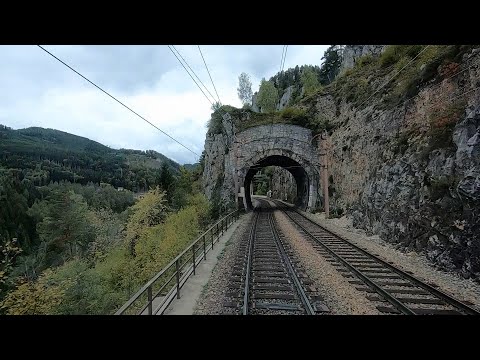
Be aware that the company that owns a line is not always the one that runs the train you saw. The Gotthard mountain line belongs to Swiss Federal Railways, but GONOM's film was made on the Treno Gottardo, a Südostbahn service. Some films were made on trains you cannot simply book: the Semmering video was shot from the cab of a Railway Touring Company special in 2019, while everyday travellers ride ÖBB regional trains over the same pass. Knowing which kind of train was filmed saves a lot of searching.
Reading timetables and reservations
Use the operator's own journey planner rather than an old blog post, because services change every year. Three things matter most. First, how often trains run: some stretches of the Gonō Line in Japan see only a handful of local trains a day, and the largely single-track Donghae Line in Korea has far fewer services than the main lines out of Seoul. Second, whether the train runs every day or only in certain seasons. Third, where you change: the Flåm Line, for example, starts at Myrdal, so most people arrive on a Bergen Line train and change there.
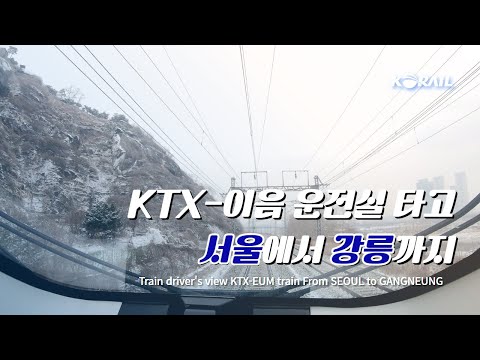
Reservation rules vary even on the same track. The Glacier Express and the Bernina Express panoramic coaches require a seat reservation, while regular regional trains over the Albula and Bernina lines can usually be used without one. Every seat on Korea's KTX trains and on JR East's Resort Shirakami is reserved. At the other extreme, the Yamanote Line in Tokyo needs no reservation at all: you tap in with an IC card and take the next train.
Rail passes in broad terms
Several regions sell passes that cover many trains for a set number of days. In Europe, Interrail passes are for European citizens and residents and Eurail passes for residents of other continents; both cover trains in 33 countries. Neither normally includes seat reservation fees on high-speed trains, night trains and popular routes, so the Bergen Line in Norway is covered but a reservation is normally still needed. The Swiss Travel Pass works the same way on the Glacier Express and the Bernina Express: the fare is covered, the reservation is charged on top.
In Japan, the Japan Rail Pass is for visitors entering on temporary visitor status and covers JR-operated lines, including the Resort Shirakami with a seat reservation and the Yamanote Line, but not private railways or the Tokyo subway. In Korea, the KORAIL PASS for foreign visitors covers most Korail trains, including the KTX, but not the subway-style commuter lines around Seoul or Korail's tourist trains, and in peak holiday periods seats may be hard to get. Separate services such as The Jacobite steam train on the West Highland Line do not accept passes at all. Rules and coverage change, so always check with the pass issuer and the operator before you buy.
Choosing the scenic side
The camera in a driver's cab sees both sides of the line at once; a passenger sees one. The GONOM guides and the videos themselves tell you which side matters. On the Resort Shirakami from Akita towards Aomori, the Sea of Japan is almost always on the left. On the Donghae Line heading north from Pohang, the sea comes into view on the right. On the West Highland Line from Fort William to Mallaig, look left at Glenfinnan for the view down Loch Shiel. On the Bernina Line, a widely used rail guide recommends the right-hand side going south and the left going north.
Travelling in the opposite direction from the film swaps all of these. Watch too for trains that reverse or divide: the Resort Shirakami reverses at Hirosaki, and Bernese Oberland Railway trains usually split at Zweilütschinen, so check the destination on your coach before you sit down. On lines where long tunnels make up much of the journey, such as the KTX route to Gangneung, the choice of side matters less.
Travelling in a different season from the video
A video shows a single day, and your trip may look very different. GONOM's Bernina Line film was made in deep winter, while in summer the same pass shows glaciers and lakes. Some services are seasonal: the Glacier Express pauses for a few weeks between mid-October and early December, although ordinary trains keep running; the Gotthard Panorama Express runs only from spring to October; and The Jacobite runs from May to October. The Flåm Line runs all year but has more departures in summer.
Season also affects how full the trains are. KTX trains to Gangneung on weekends and holidays can sell out, the Resort Shirakami is busiest in summer and the autumn leaf season, and Flåm trains in summer are often full of tour groups. If your dates are fixed, book as soon as reservations open. In winter, also check how much daylight you will have, especially in the far north, since a cab-ride video filmed in summer light may not be what you see from the window.
Linking long-distance trains with city metros
Most rail trips start or end in a city, and GONOM's subway maps show where the main stations sit in each metro network. In Seoul, KTX trains to Gangneung mostly start at Seoul Station or Cheongnyangni, and on the Seoul map Seoul Station is served by Lines 1 and 4. The KORAIL PASS does not cover the subway, so carry a transit card as well. In Tokyo, GONOM's map shows the Tokyo Metro and Toei subway lines, while the Yamanote Line is a JR line with its own GONOM video, which is why the Japan Rail Pass is valid on one and not the other.
The same approach works in Europe. On the Milan map, Centrale is served by lines M2 and M3, and from Milano Centrale Trenord regional trains run to Tirano, the southern end of the Bernina Line. On the Vienna map, Hauptbahnhof sits on line U1 and is the station for trains towards the Semmering. Allow time for the change between metro and main line, and remember that city transport tickets are usually separate from rail tickets. Check the operator's website for every leg before you travel.
Watch these journeys on GONOM
-
 Gotthard mountain line
Bellinzona → Erstfeld
1h 28mBoard
-
 Semmering Railway
Payerbach → Mürzzuschlag
Full journeyBoard
-
 Bernina Line
St. Moritz → Tirano
1h 58mBoard
-
 Glacier Express route
St. Moritz → Chur
1h 54mBoard
-
 KTX Gangneung Line
Seoul → Gangneung
2h 0mBoard
-
 Donghae Line
Pohang → Gangneung
Full journeyBoard
-
 Gonō Line (Resort Shirakami)
Akita → Aomori
4h 59mBoard
-
 Yamanote Line (inner loop)
Tokyo → Tokyo
1h 7mBoard
-
 West Highland Line
Fort William → Mallaig
Full journeyBoard
-
 Flåm Line
Myrdal → Flåm
Full journeyBoard
-
 Bergen Line
Bergen → Oslo
7h 14mBoard
-
 Bernese Oberland Railway
Interlaken Ost → Grindelwald
31mBoard
Subway maps mentioned
Seoul · Tokyo · Milan · Vienna
Sources
More guides
- How mountain railways climb: loops, spirals, switchbacks and rack
- How to watch a cab-ride video: signals, signs and what the driver sees
- Korea's east coast by rail: Gangwon, the Donghae Line and Busan
- Japan beyond the Shinkansen: slow local lines worth watching
- Why subway maps look the way they do
- Rail journeys of Norway and Sweden
- Crossing the Alps by train: the Alpine cab rides on GONOM and how they connect
- Railways on the UNESCO World Heritage List, and what earned them a place
- Hill railways of South Asia: Darjeeling, the Nilgiris and Sri Lanka's tea country
- Narrow gauge explained: standard, broad, metre and 2 ft track, and why the width matters
- Coastal railways: why lines by the sea are so hard to build and keep open
- Railways in winter: how trains keep running through snow, ice and avalanches
- Railway tunnels: summit tunnels, base tunnels and how they are dug
- Rail through the seasons: when to ride which kind of line
- British rail journeys: the West Highland, Highland Main, Dartmoor and East Coast lines
- Metro, commuter rail, light rail or tram: how to tell city trains apart
- Korean trains explained: KTX, KTX-Eum, ITX, Nuriro and Mugunghwa
- Everyday regional trains of Central Europe, and why they are worth watching
- Scenic railways of the Americas and New Zealand: built for gold, silver and ports