Rail through the seasons: when to ride which kind of line
Spring blossom, midnight sun, autumn colour, deep snow and the monsoon: how the season changes each kind of railway, using GONOM's route notes and cab films.
A film shows one day; a line has a whole year
Every cab-ride video is a record of one journey on one day. GONOM's Bohinj Railway film was made in March, before the valleys turned green; the Cinque Terre film in December; the Bernina Line film in deep snow. Ride the same line in another month and you may hardly recognise it. That is why each GONOM route page carries a best-season note, and reading those notes side by side shows a pattern: what matters depends more on the kind of line than on the country it is in.
Lines through broadleaf forest and river valleys peak with autumn colour. High mountain lines become two different railways, one green and one white. Coastal lines are often at their best in the mild months either side of summer. In the tropics, rain decides more than temperature does. A few lines barely change their character through the year: the Yamanote Line in Tokyo, the BART Yellow Line across the San Francisco Bay Area and the East Coast Main Line from York to Newcastle are worth watching in any month.
Spring: blossom, fresh green and full waterfalls
Spring suits lines where the interest is new growth and running water. On the Yamanote Line, late March to early April brings cherry blossom along the embankments. Korea's Gyeongchun Line is at its freshest in April and May, as new leaves spread over the hills along the river, and the Douro Line's terraced vineyards turn green in spring before the summer heat. The Cinque Terre coast line is best in spring and autumn, when the coast is mild and the hillside terraces are green or being harvested.
On mountain lines, spring is the season of meltwater. The Flåm Line's waterfalls, Kjosfossen among them, run in full flow from May to September. In Sri Lanka, the first inter-monsoon months of March and April bring afternoon thunderstorms but are a good time for the hill country, the setting of the Main Line from Nanu Oya to Kandy. There, clear mornings give the widest views over the tea estates, while later in the day cloud often settles on the higher ridges.
Summer: long days and the midnight sun
Summer belongs to the far north. North of the Arctic Circle the sun stays above the horizon at midnight for weeks: at the Circle itself from about 12 June to 1 July, at Bodø, the end of the Nordland Line, from about 4 June to 8 July, and at Narvik, the end of the Ofoten Line, from late May to mid-July. GONOM's Nordland Line film is NRK's summer journey, recorded on 31 July 2012, a few weeks after the midnight sun ended at Bodø. NRK filmed the same line in all four seasons that year.
Some lines are summer lines by necessity. The White Pass & Yukon Route operates from late May to September, and snow can linger at its summit into June. The Gotthard Panorama Express runs only from May to October, although ordinary trains use the Gotthard mountain line all year. The West Highland Line has its longest days from May to September, and the Resort Shirakami on Japan's Gonō Line is good for sunsets over the Sea of Japan from summer into early autumn.
Autumn: colour on the forest and vineyard lines
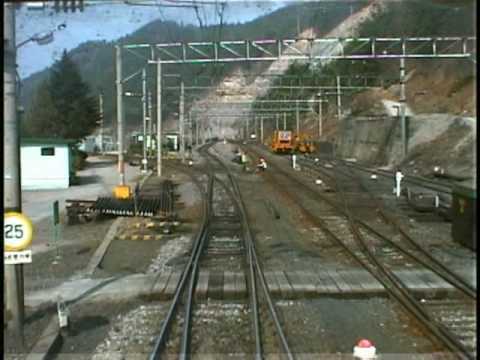
Autumn rewards lines that run through deciduous woods. In Japan, the Tadami Line is best from late October into November, when the forested slopes above its dammed river turn. In Korea, the Yeongdong Line's best season is October and November, as colour reaches the Taebaek Mountains, and the Gyeongchun Line has its second peak at the same time. Colour usually comes first to high ground and works its way down, so a single mountain journey can pass from bare branches to full colour within an hour.
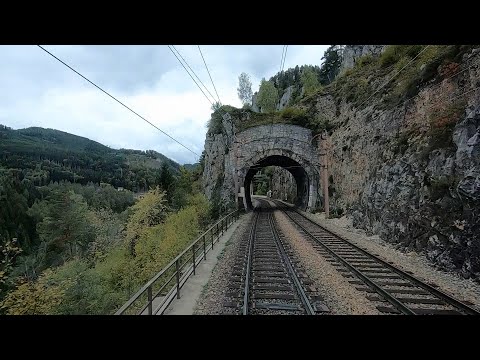
In Europe, the Douro Line changes in late September and October, after the grape harvest, and the Rhine Gorge adds the colour of its vine terraces in autumn. The Semmering's slope forests turn, the beech and spruce woods along the Trutnov line in Czechia change colour, and the Veluwe forests on the Zwolle–Amersfoort line are at their best in autumn, after the heath has bloomed in late August. On the West Highland Line, autumn brings brown bracken and yellow birch to the hillsides.
Winter: snow, low light and the polar night
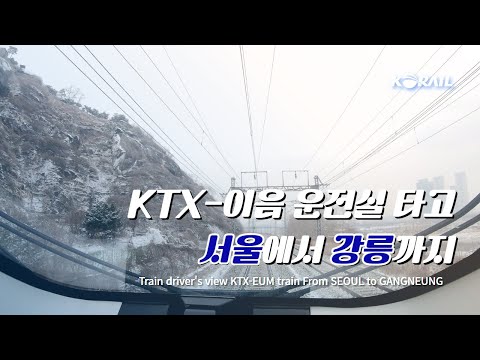
On mountain lines, winter creates a second railway. The Bergen Line is at its whitest on Hardangervidda from February to April. The Tadami Line has deep snow in January and February, the KTX Gangneung Line from December to February, and the Bernese Oberland line to Grindelwald from December to March. The TranzAlpine turns the calendar round: in New Zealand, snow lies on the Southern Alps from June to September. On the Glacier Express route the panoramic train pauses from mid-October to early December, but regular trains keep running.
In the far north, winter also takes away the light. At Tromsø, north of the GONOM lines, the sun does not rise from late November to mid-January, while Bodø, just north of the Arctic Circle, has no full polar night. That is why the Ofoten Line's note suggests late winter, when snow still lies deep but the low Arctic sun has returned. Coastal lines change too: the Donghae Line's sea views are sharpest on clear winter days, and the Gonō Line faces rough seas and snow. GONOM's guide to railways in winter explains how such lines are kept open.
Monsoon and rain: the tropical and subtropical lines
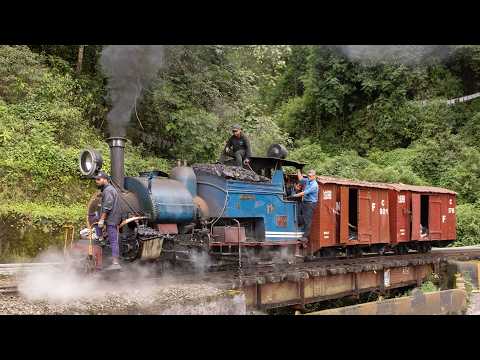
In South Asia the calendar is set by the monsoon. India's southwest monsoon brings most of the year's rain from about June to September, and on mountain railways that rain is a practical matter as well as a question of views. The Darjeeling Himalayan Railway is best outside the monsoon, because heavy rain can bring rockslides down onto the Hill Cart Road and the track together, and parts of the line are sometimes closed. The Nilgiri Mountain Railway is likewise best outside the heaviest rain, which can cause landslides that close the line for a while.
Sri Lanka has two monsoons. The southwest monsoon, from May to September, brings heavy rain to the southwest coast and the hills; the northeast monsoon, from December to February, is the dry, clear season on the southwest side. On the hill-country line, Hatton sees around a million passengers during the Adam's Peak pilgrimage season from December to May. Elsewhere rain plays the same role: Taiwan's Alishan Forest Railway is best outside the typhoon season, and Brazil's Serra Verde Express has drier weather and clearer views from April to September.
Watch these journeys on GONOM
-
 Bohinj Railway
Jesenice → Nova Gorica
Full journeyBoard
-
 Cinque Terre Coast Line
La Spezia → Recco
Full journeyBoard
-
 Bernina Line
St. Moritz → Tirano
1h 58mBoard
-
 Yamanote Line (inner loop)
Tokyo → Tokyo
1h 7mBoard
-
 Gyeongchun Line
Yongsan → Chuncheon
Full journeyBoard
-
 Douro Line
Régua → Pocinho
Full journeyBoard
-
 Flåm Line
Myrdal → Flåm
Full journeyBoard
-
 Main Line through the Hill Country
Nanu Oya → Kandy
Full journeyBoard
-
 Nordland Line
Trondheim → Bodø
Full journeyBoard
-
 Ofoten Line and Iron Ore Line
Kiruna → Narvik
Full journeyBoard
-
 White Pass & Yukon Route
Skagway → Carcross
Full journeyBoard
-
 Gotthard mountain line
Bellinzona → Erstfeld
1h 28mBoard
-
 West Highland Line
Fort William → Mallaig
Full journeyBoard
-
 Gonō Line (Resort Shirakami)
Akita → Aomori
4h 59mBoard
-
 Tadami Line
Aizu-Wakamatsu → Koide
Full journeyBoard
-
 Yeongdong Line
Heungjeon → Dogye
10mBoard
-
 Left Rhine Railway through the Rhine Gorge
Koblenz → Mainz
50mBoard
-
 Semmering Railway
Payerbach → Mürzzuschlag
Full journeyBoard
-
 Trutnov–Teplice nad Metují line
Trutnov → Teplice nad Metují
1h 8mBoard
-
 Zwolle–Amsterdam via Amersfoort
Zwolle → Amsterdam Centraal
1h 9mBoard
-
 Bergen Line
Bergen → Oslo
7h 14mBoard
-
 KTX Gangneung Line
Seoul → Gangneung
2h 0mBoard
-
 Bernese Oberland Railway
Interlaken Ost → Grindelwald
31mBoard
-
 TranzAlpine
Christchurch → Greymouth
Full journeyBoard
-
 Glacier Express route
St. Moritz → Chur
1h 54mBoard
-
 Donghae Line
Pohang → Gangneung
Full journeyBoard
-
 Darjeeling Himalayan Railway
Kurseong → Darjeeling
Full journeyBoard
-
 Nilgiri Mountain Railway
Tunnel No. 3 (above Kallar) → Runneymede
48mBoard
-
 Alishan Forest Railway
Fenqihu → Alishan
Full journeyBoard
-
 Curitiba–Paranaguá Railway (Serra Verde Express)
Curitiba → Morretes
3h 12mBoard
-
 BART Yellow Line
SFO Airport → Antioch
Full journeyBoard
-
 East Coast Main Line
York → Newcastle
Full journeyBoard
Sources
More guides
- How mountain railways climb: loops, spirals, switchbacks and rack
- How to watch a cab-ride video: signals, signs and what the driver sees
- Korea's east coast by rail: Gangwon, the Donghae Line and Busan
- Japan beyond the Shinkansen: slow local lines worth watching
- Why subway maps look the way they do
- Rail journeys of Norway and Sweden
- Crossing the Alps by train: the Alpine cab rides on GONOM and how they connect
- Planning a rail trip from a cab-ride video: how to go from watching a line to riding it
- Railways on the UNESCO World Heritage List, and what earned them a place
- Hill railways of South Asia: Darjeeling, the Nilgiris and Sri Lanka's tea country
- Narrow gauge explained: standard, broad, metre and 2 ft track, and why the width matters
- Coastal railways: why lines by the sea are so hard to build and keep open
- Railways in winter: how trains keep running through snow, ice and avalanches
- Railway tunnels: summit tunnels, base tunnels and how they are dug
- British rail journeys: the West Highland, Highland Main, Dartmoor and East Coast lines
- Metro, commuter rail, light rail or tram: how to tell city trains apart
- Korean trains explained: KTX, KTX-Eum, ITX, Nuriro and Mugunghwa
- Everyday regional trains of Central Europe, and why they are worth watching
- Scenic railways of the Americas and New Zealand: built for gold, silver and ports